

ISUZU / CASE Construction 6WG1T (2000 Model Year) Diesel Engine Service Manual 9-54850NA English
Official Manual Overview
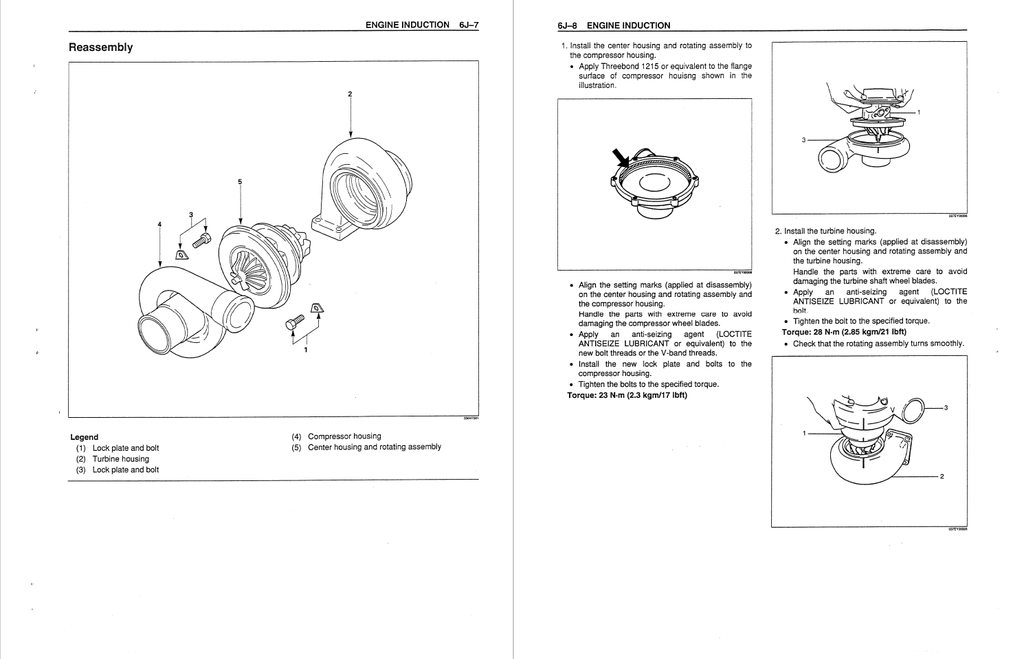
Take absolute command over the massive 15.6-liter Isuzu 6WG1T Diesel Engine with this definitive, completely unredacted OEM Service Manual, officially published under the CNH/CASE Construction architecture. Now confirmed as the ultimate, fully intact master reference, this volume bypasses basic external maintenance to deliver uncompromising, surgical reconstruction protocols for the entire engine block and its critical auxiliary networks. It dictates absolute factory metrology, enforcing an immense M18 cylinder head bolt angular tightening sequence (245 Nm plus a 60–90 degree final rotation) and establishing a strict 147.030 mm cylinder liner bore limit. Beyond the mechanical core, it provides the exact engineering blueprints to completely overhaul the previously elusive systems: dictating a strict 0.075–0.110 mm turbine shaft end play for the IHI RHC92 turbocharger, calibrating the Bosch/ZEXEL P-Type injection pump to a precise 20.1 MPa (2,915 psi) opening pressure, and executing deep electrical teardowns of the heavy-duty Mitsubishi 24V/7.0kW starter motor and 50A alternator. Engineered strictly for elite engine builders, this guide is the final word on restoring peak combustion efficiency and raw power.
- Brands: ISUZU / CASE Construction
- Equipment Type: Diesel Engine
- Manuals Type: Service Manual
- Machine Model: 6WG1T (Applicable to 2000 model year engines)
- Serial Number: N/R
- Region: N/R
- Book Code: 9-54850NA
- Issued: Printed in U.S.A. December 2002
- Language: English
- Pages: 252
- File Format: PDF (Searchable)
Core Selling Points
- Deep-Level Bottom End Metrology: Master the 15.6-liter block's mechanical foundation. This manual establishes rigid micrometer benchmarks for the gear train and rotational mass, mandating immediate component replacement if the idler gear backlash exceeds the absolute 0.25 mm limit, or if the crankshaft journal-to-bearing clearance surpasses the critical 0.16 mm threshold.
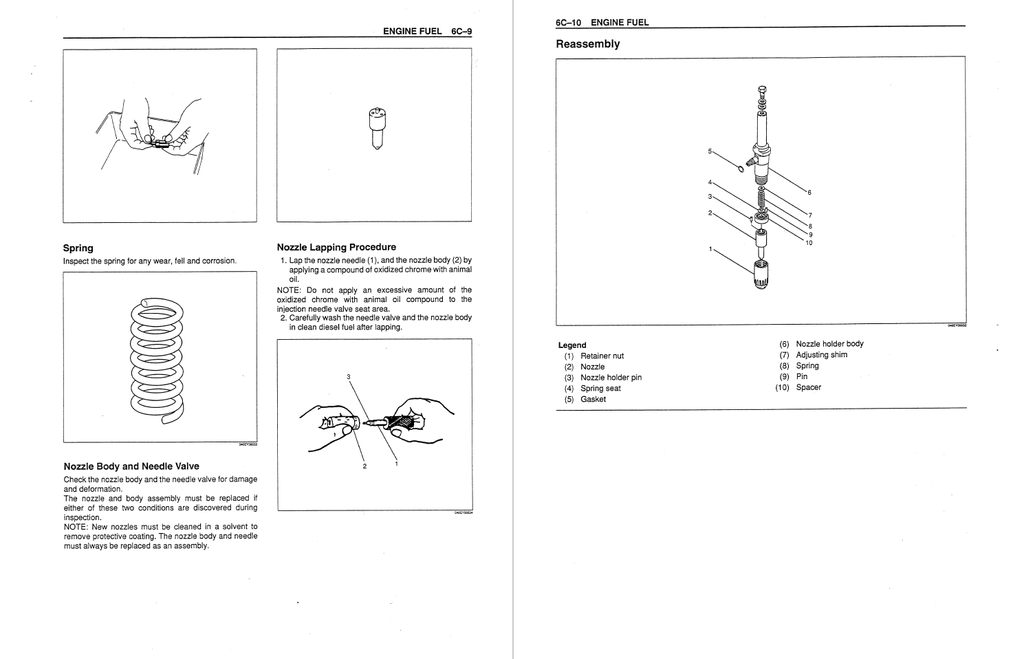
- Two-Stage Fuel Atomization Calibration: Eliminate erratic idling, power loss, and black smoke. It provides the exact mathematical formulas for selecting adjustment shims, requiring technicians to calibrate the ZEXEL two-stage injection nozzle's first stage opening pressure to exactly 17.7 MPa (2,560 psi), and the second stage to a precise 23.0 to 24.0 MPa (3,340 - 3,480 psi) window at an exact 0.11 mm needle valve lift.
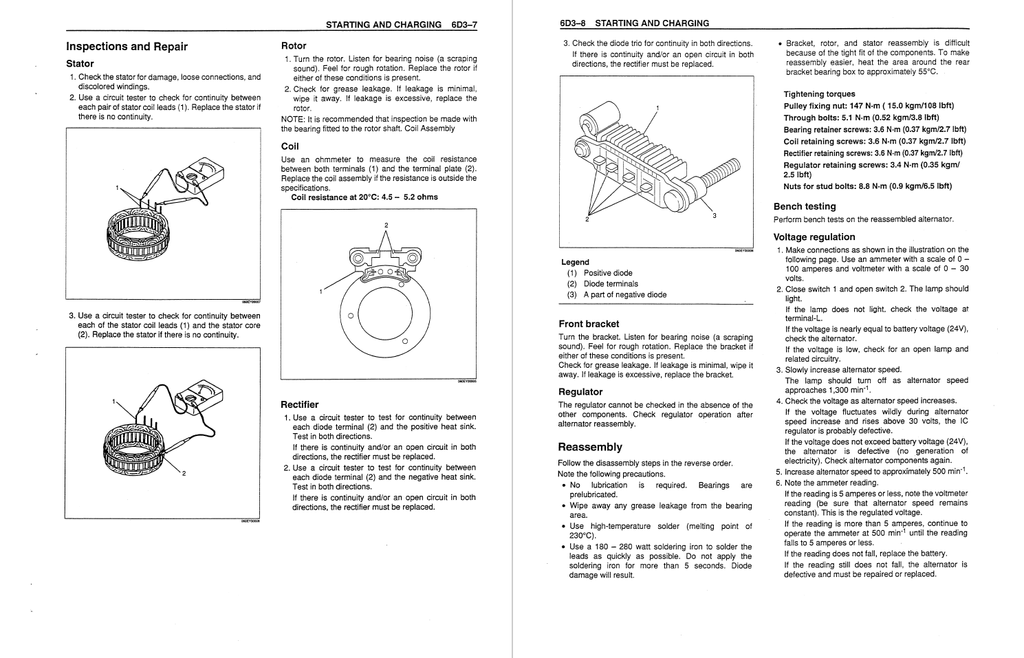
- Heavy-Duty Electrical Circuitry Interrogation: Bypass diagnostic guesswork on the 24V starting and charging networks. The documentation completely maps out the internal charging circuit diagrams, dictating specific multimeter resistance benchmarks—such as verifying the 50A Mitsubishi alternator's stator coil maintains a strict 4.5 to 5.2 ohms resistance at 20°C to guarantee proper output.
Features & Highlights
- Multi-Stage Angular Fastening Architectures: Prevent catastrophic bottom-end separation under severe industrial loads. The guide strictly enforces angular tightening protocols across the block, explicitly instructing builders to lock down the heavy-duty M18 crankcase bolts with an initial 49 N·m torque, followed by an 88 N·m step, and culminating in a brutal 90 to 120-degree rotational stretch.
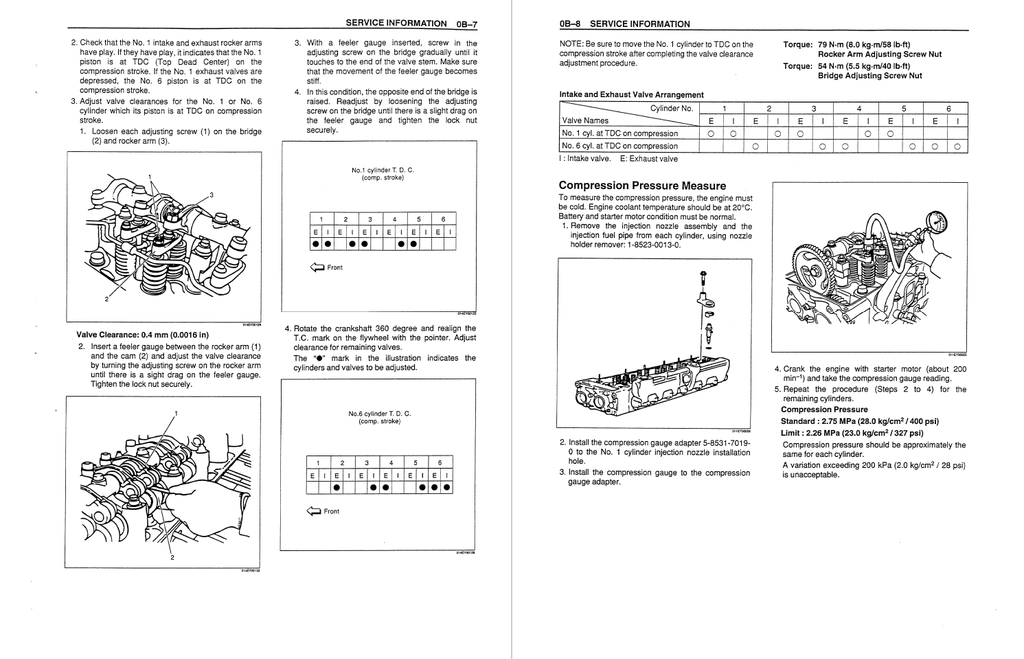
- Micro-Precision Valvetrain Clearances: Restore absolute factory aspiration and combustion sealing. Machinists are equipped with exhaustive cylinder head geometric data, condemning exhaust valve stems the moment they wear down to the 9.90 mm absolute limit, and enforcing a rigid 0.40 mm baseline clearance for both intake and exhaust valves during cold engine adjustments.
- Surgical Lubrication System Overhaul: Rebuild the gear-driven oil pump with absolute mathematical certainty. The text defines uncompromising internal fluid tolerances, demanding parts replacement if the clearance between the oil pump gear shaft and body exceeds 0.074 mm, ensuring maximum pressure delivery to the turbocharger and critical piston cooling jets.
Problem Solver
- Eradicates Critical Compression Loss: Troubleshoot severe blow-by and hard-starting failures definitively. The manual outlines exact testing procedures using the specified 1-8531-7019-0 compression gauge adapter, establishing that a healthy cylinder must hit 2.75 MPa (400 psi) at 200 rpm, explicitly condemning any cylinder falling below the 2.26 MPa baseline limit.
- Cures Phantom Starting Motor Stalling: Prevent unnecessary and expensive starter replacements. The guide breaks down the massive 7.0kW Mitsubishi starter motor into its microscopic components, instructing mechanics to replace the armature instantly if the commutator undercut depth falls below the 0.2 mm limit or if the brush length shrinks past the 11 mm service limit.
- Resolves Destructive Thermal Events: Eliminate hidden overheating triggers that warp cylinder heads. Exhaustive troubleshooting matrices guide builders through testing the wax-pellet thermostat in heated fluid, requiring physical verification that the valve initiates opening exactly at 82°C and reaches its full 11 mm lift precisely at 95°C.
Important Pre-Purchase Advisories
- Strictly Engine-Focused Literature: This specific service manual acts as the definitive technical blueprint exclusively for the standalone Isuzu 6WG1T diesel engine (specifically applicable to 2000 model year configurations). It exhaustively covers internal engine machining, fuel calibration, and engine-mounted electrical specifications. For diagnostics relating to the host machine's chassis, main hydraulic pumps, cab electronics, or undercarriage, a separate machine-specific service manual is required.
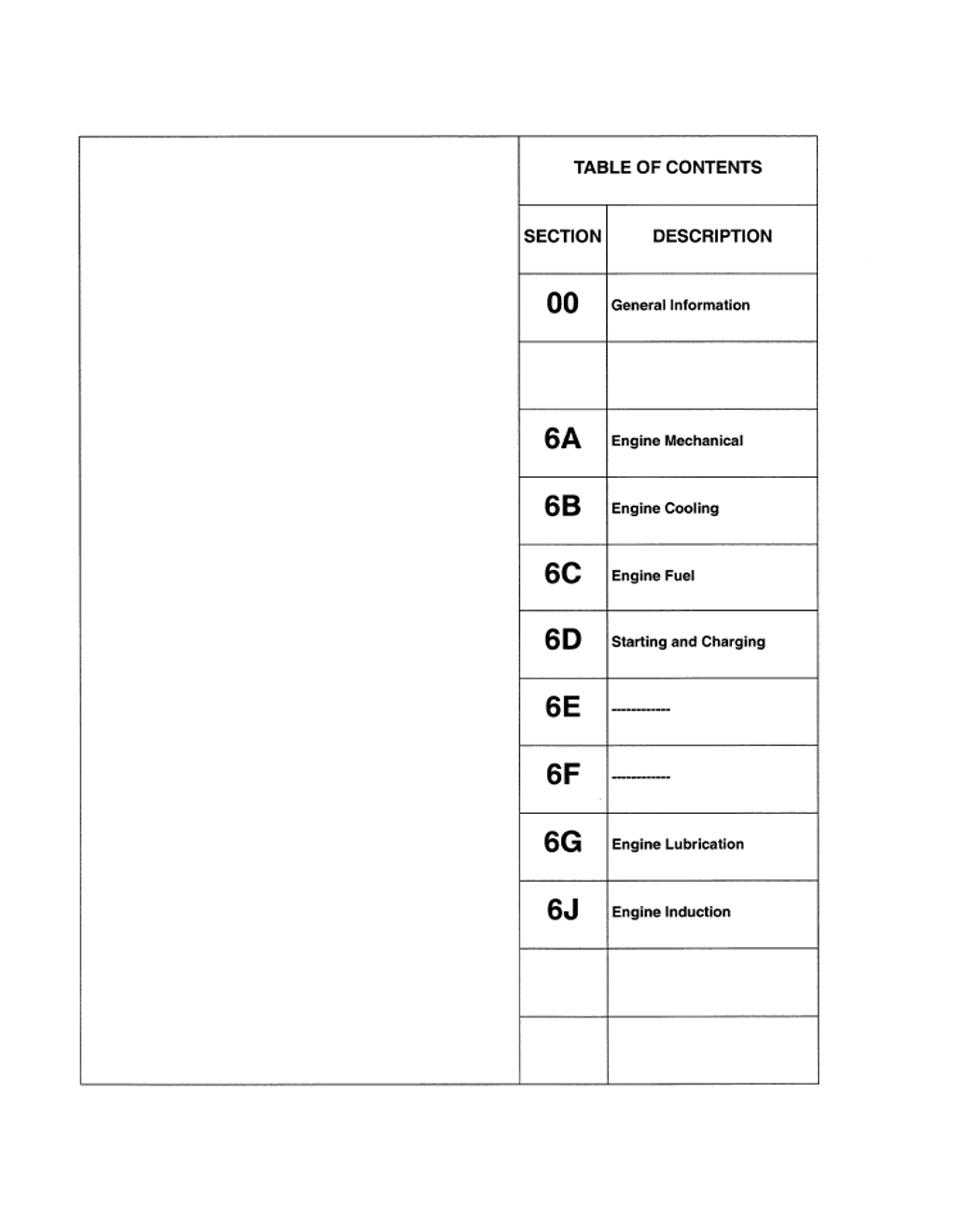
Table of Contents
- General Information
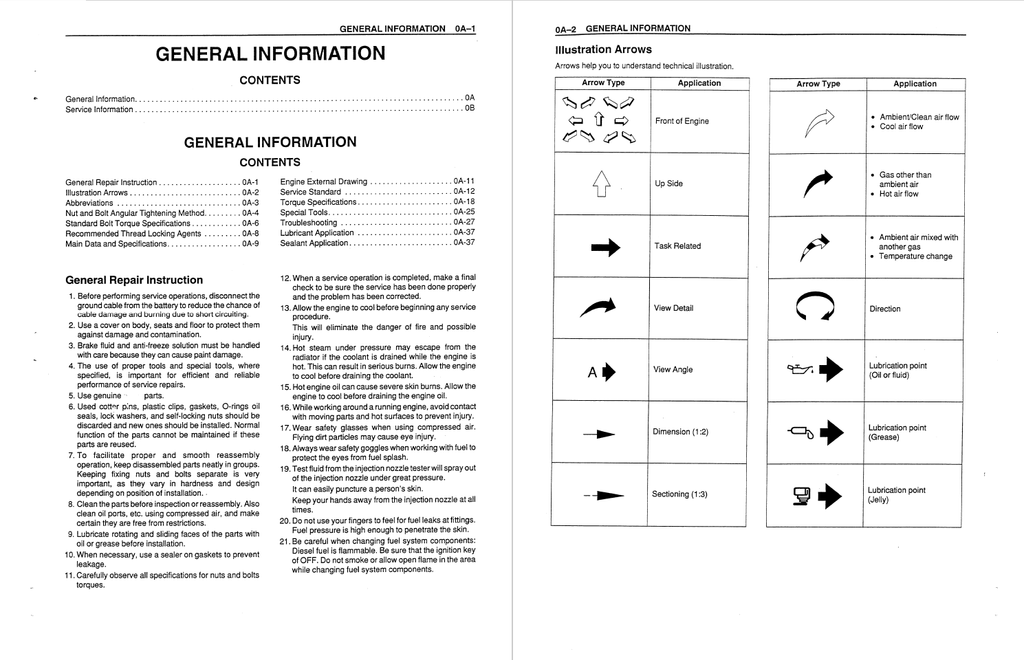
- General repair instruction
- Illustration arrows
- Abbreviations
- Nut and bolt angular tightening method
- Standard bolt torque specifications
- Recommended thread locking agents
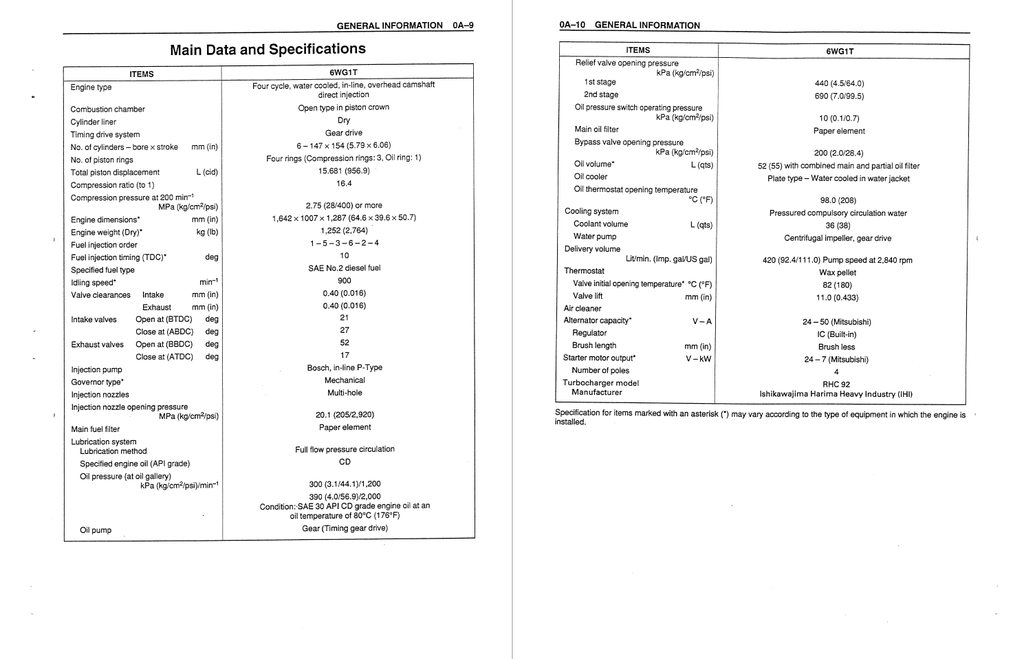
- Main data and specifications
- Engine external drawing
- Service standard
- Torque specifications
- Special tools
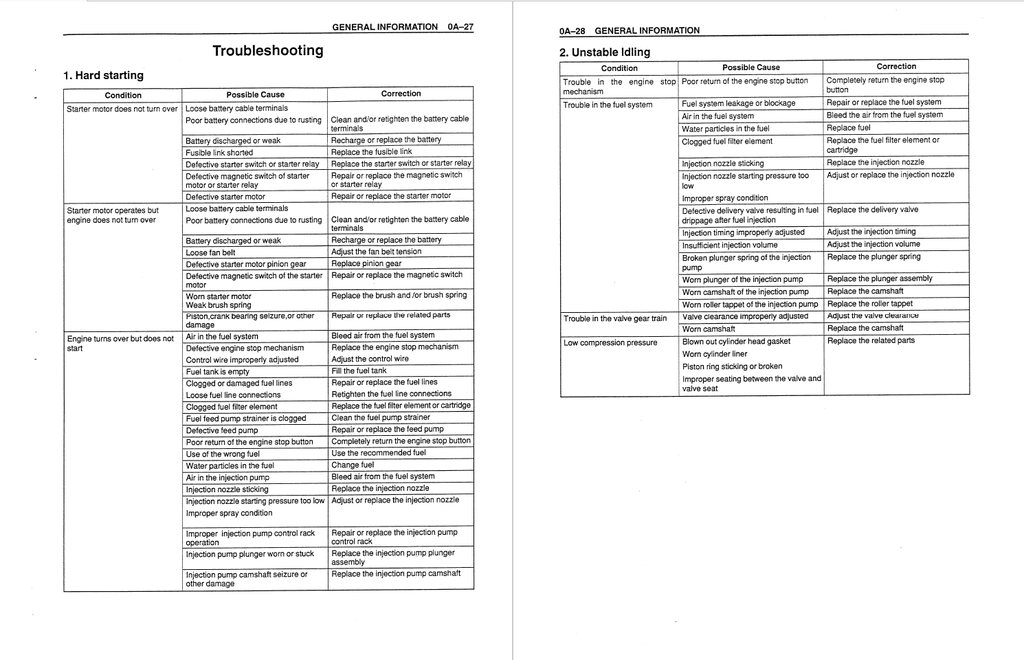
- Troubleshooting
- Lubricant application
- Sealant application
- Service Information
- Identification
- Lubrication system
- Fuel system
- Cooling system
- Valve clearance adjustment
- Compression pressure measurement
- Recommended lubricants
- Engine oil viscosity chart
- Engine Mechanical
- Service precautions
- General description
- Engine cleanliness and care
- General information on engine service
- Fan center
- Removal
- Installation
- Turbocharger
- Removal
- Installation
- Exhaust manifold
- Removal
- Installation
- Inlet manifold
- Removal
- Installation
- Water pump
- Removal
- Installation
- Alternator
- Removal
- Installation
- Oil cooler
- Removal
- Installation
- Injection pump
- Removal
- Installation
- Coupling assembly
- Removal
- Installation
- Cylinder head
- Removal
- Installation
- Disassembly
- Inspection and repair
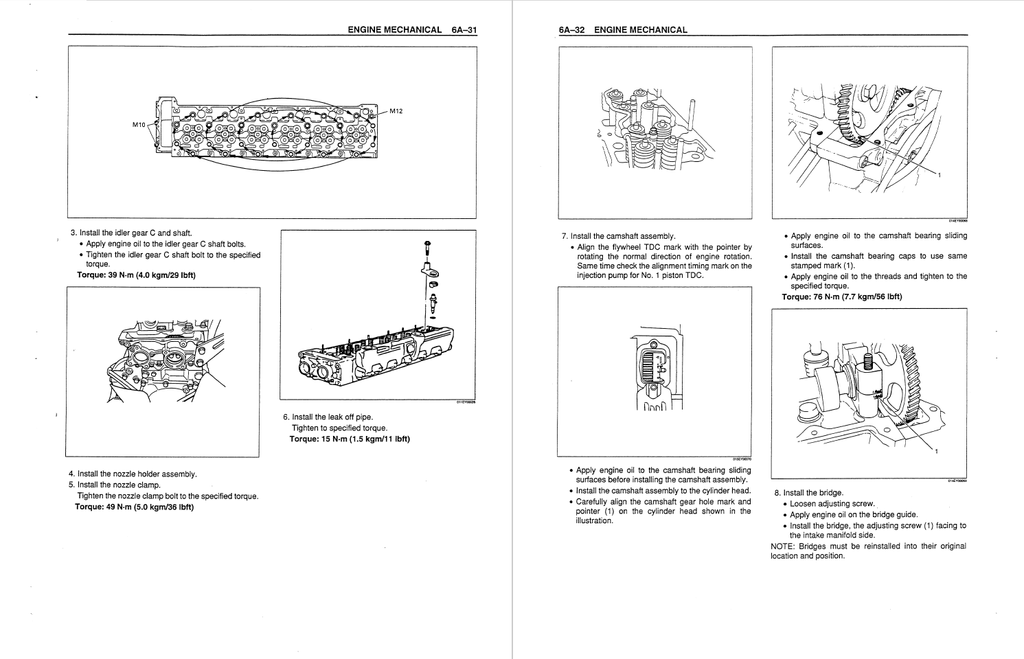
- Reassembly
- Rocker arm and shaft assembly
- Disassembly
- Inspection and repair
- Reassembly
- Camshaft
- Disassembly
- Inspection and repair
- Reassembly
- Timing gears
- Removal
- Inspection and repair
- Installation
- Flywheel housing
- Removal
- Installation
- Oil pan
- Removal
- Installation
- Piston
- Removal
- Installation
- Disassembly
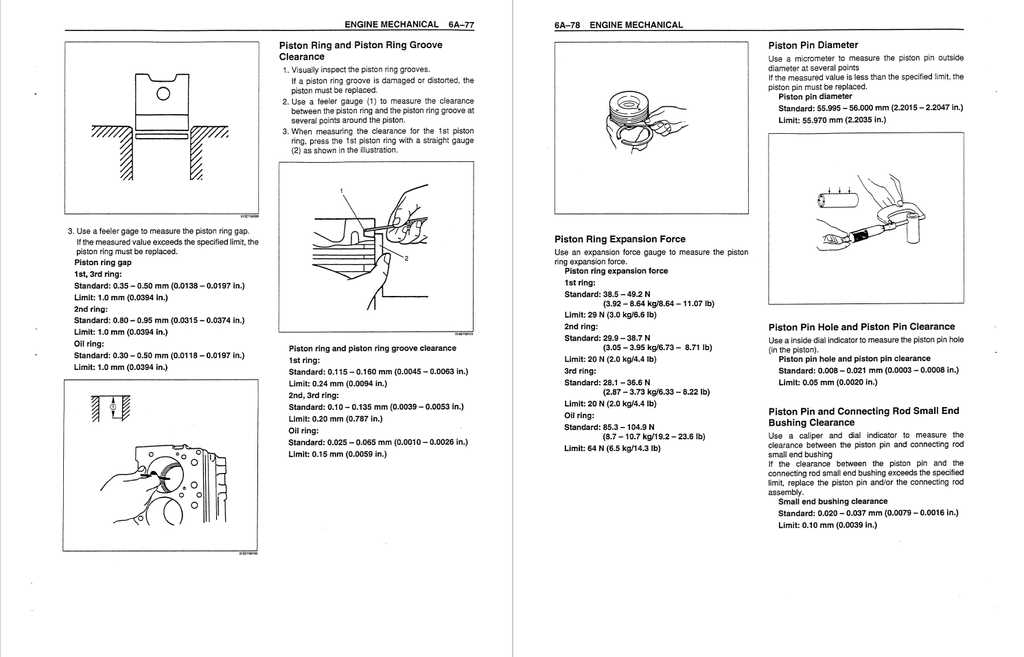
- Inspection and repair
- Reassembly
- Crankshaft
- Removal
- Installation
- Disassembly
- Inspection and repair
- Reassembly
- Crank pulley
- Disassembly
- Inspection and repair
- Reassembly
- Flywheel
- Disassembly
- Inspection and repair
- Reassembly
- Cylinder block
- Disassembly
- Inspection and repair
- Reassembly
- Engine Cooling
- Service precaution
- General description
- Water pump
- Disassembly
- Inspection and repair
- Reassembly
- Thermostat
- Disassembly
- Inspection and repair
- Reassembly
- Engine Fuel
- Service precaution
- General description
- Fuel filter
- Disassembly
- Inspection and repair
- Reassembly
- Injection nozzle holder
- Disassembly
- Inspection and repair
- Reassembly
- Injection pump
- Identification
- Calibration data
- Injection nozzle holder – Two Stage
- Injection type
- Nozzle and holder specification
- Reassembly and opening pressure adjustment
- Starting and Charging
- Service precaution
- Alternator
- General description
- Disassembly
- Inspection and repair
- Reassembly
- Starter motor
- General description
- Disassembly
- Inspection and repair
- Reassembly
- Engine Lubrication
- Service precaution
- General description
- Oil pump
- Disassembly
- Inspection and repair
- Reassembly
- Oil cooler
- Disassembly
- Inspection and repair
- Reassembly
- Main oil filter
- Disassembly
- Reassembly
- Partial oil filter
- Disassembly
- Reassembly
- Engine Induction
- Service precaution
- Turbocharger
- General description
- Disassembly
- Inspection and repair
- Reassembly